Module P · training engineering
A programme written with your departments, delivered to the week.
Terms of reference, competency frameworks, city-by-city sessions, assessment, certificates, participant kits, a quantified final report: the programme is scoped with you, then delivered, in our units or on your premises.

The sheet
What the Programme module contains.
- Who it is for
- A department with trainers but no structured curriculum
- An operator that needs competency frameworks and assessment
- An agency that needs a logical framework and indicators
- A foundation that wants a measurable result
- What you receive
- Terms of reference drafted with your departments and signed before anything starts
- Competency frameworks and syllabi per module, materials, simulation equipment, participant kits
- City-by-city schedule, intake per session, a steering committee you chair
- Assessment, certificates, photo library, final report
- Six verticals: technical trades, digital, languages, entrepreneurship, agriculture and energy, health professions
- How it works
- 01Scoping · learners, objectives, cities, schedule: the terms of reference
- 02Engineering · frameworks, materials, kits, assessment plan, communication plan
- 03Sessions · one week per city, intake held, attendance and assessment recorded
- 04Review · results by region, trainers trained, what stays behind
- How it is priced
- Per programme: scoping and engineering
- Per cohort and per region: delivery of sessions, certificates, final report
- Third-party vendor certifications, per unit, when you ask for them
- What it asks of you
- Selection of the learners: we prepare it with you
- Any allowances paid to learners
- Your premises, if you do not add the Unit module
The six verticals
Each vertical has its own standard sheet: objectives, audience, duration, content, delivery, assessment, experts.
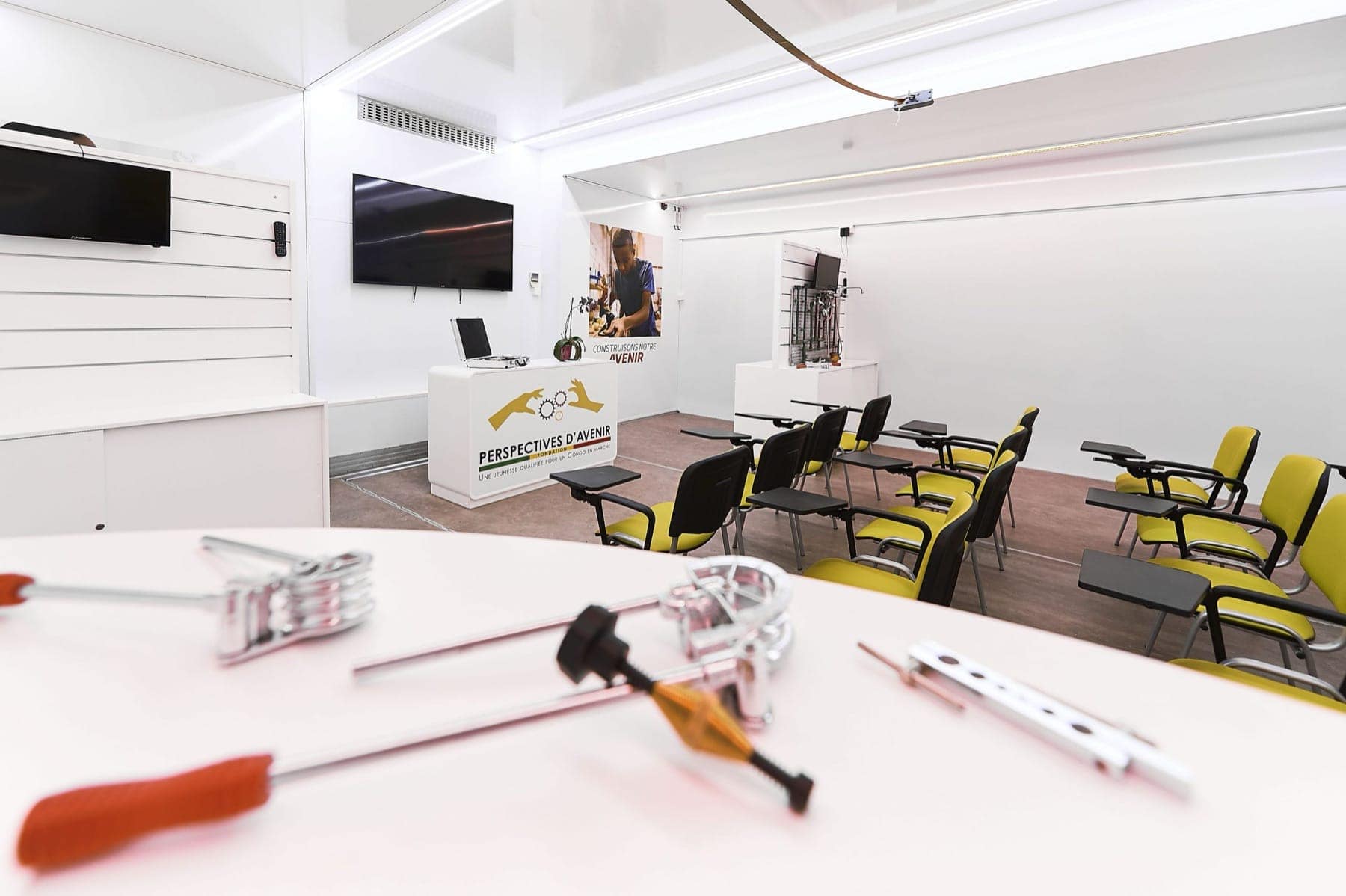
Tools in a mobile workshop
Technical trades
A trade in three months, in the workshop that comes to the village.
The sheet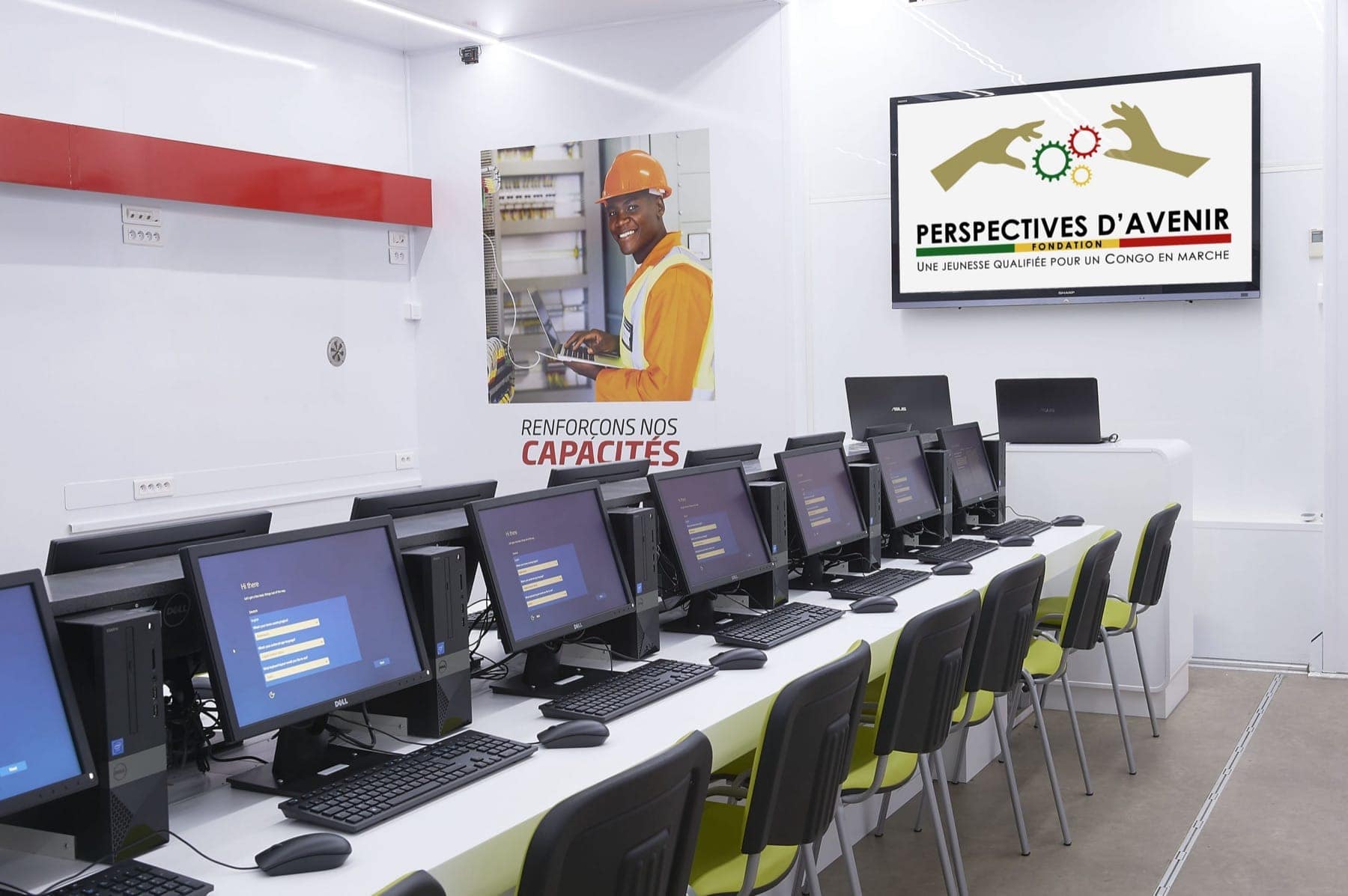
A 12-station computer room inside a mobile unit
Digital & office skills
Certifying a generation in digital skills, with the PCs and interactive whiteboard on board.
The sheet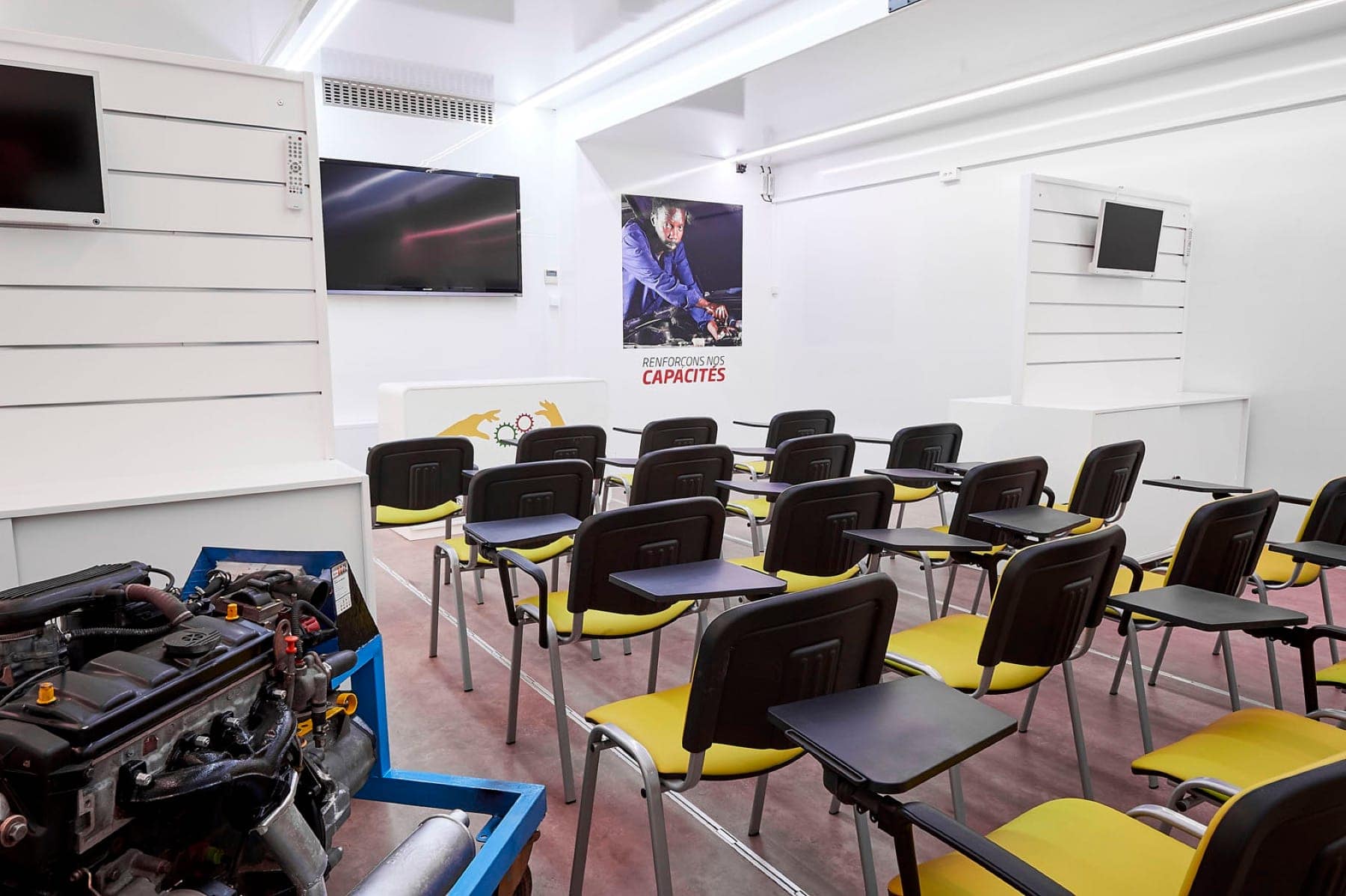
A classroom inside a mobile training unit
Languages & soft skills
The language centre that travels with the caravan.
The sheet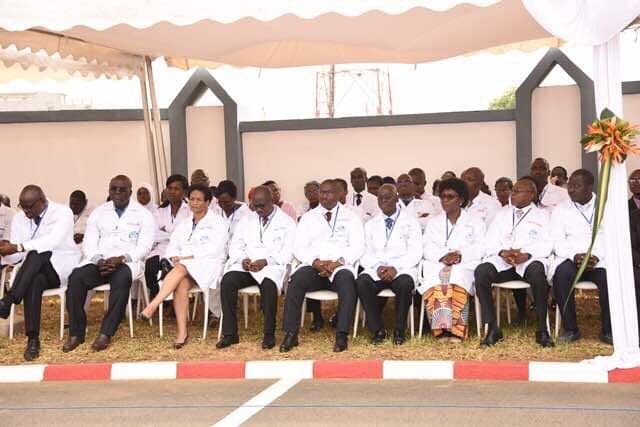
Certificates awarded at the end of a programme
Entrepreneurship & career centre
From training to employment: the career centre that closes the loop.
The sheet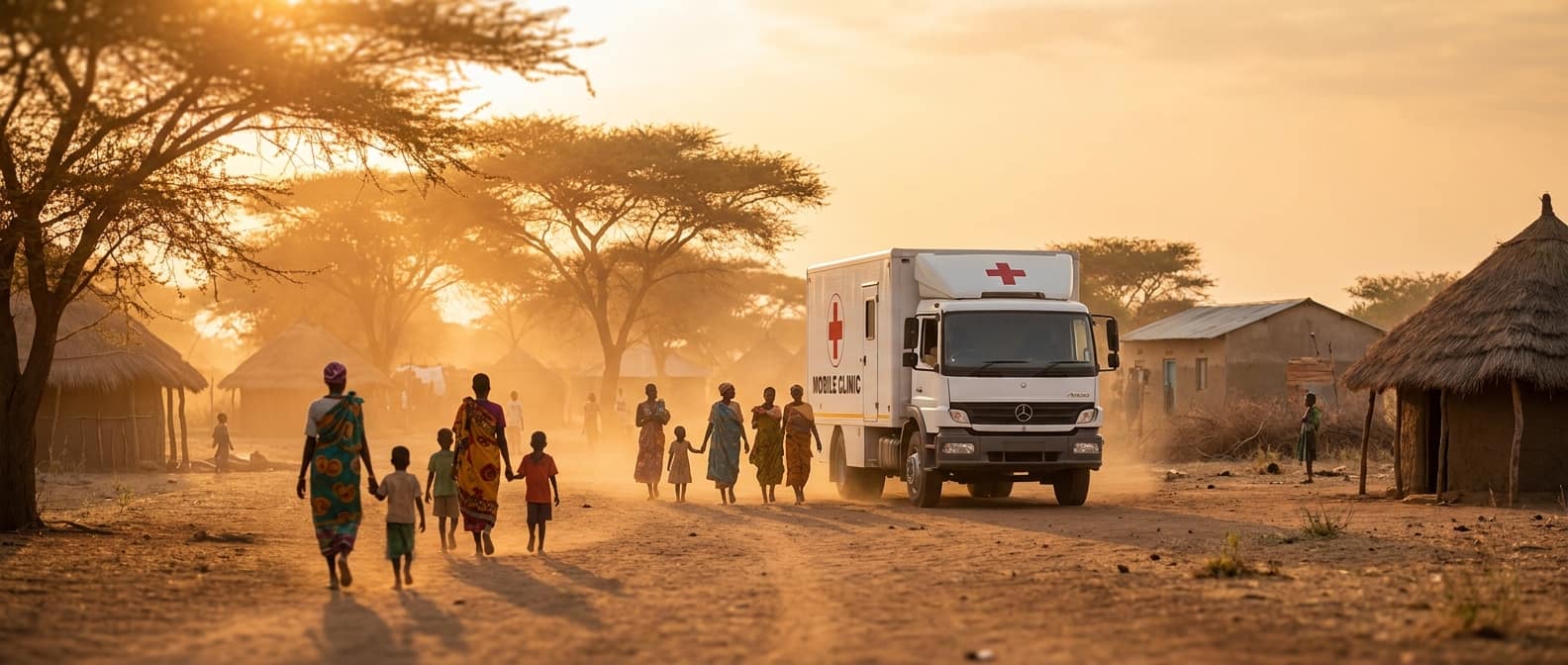
Rendering · illustration
Agriculture & energy
Training for the trades in short supply: agriculture, agri-processing, solar.
The sheet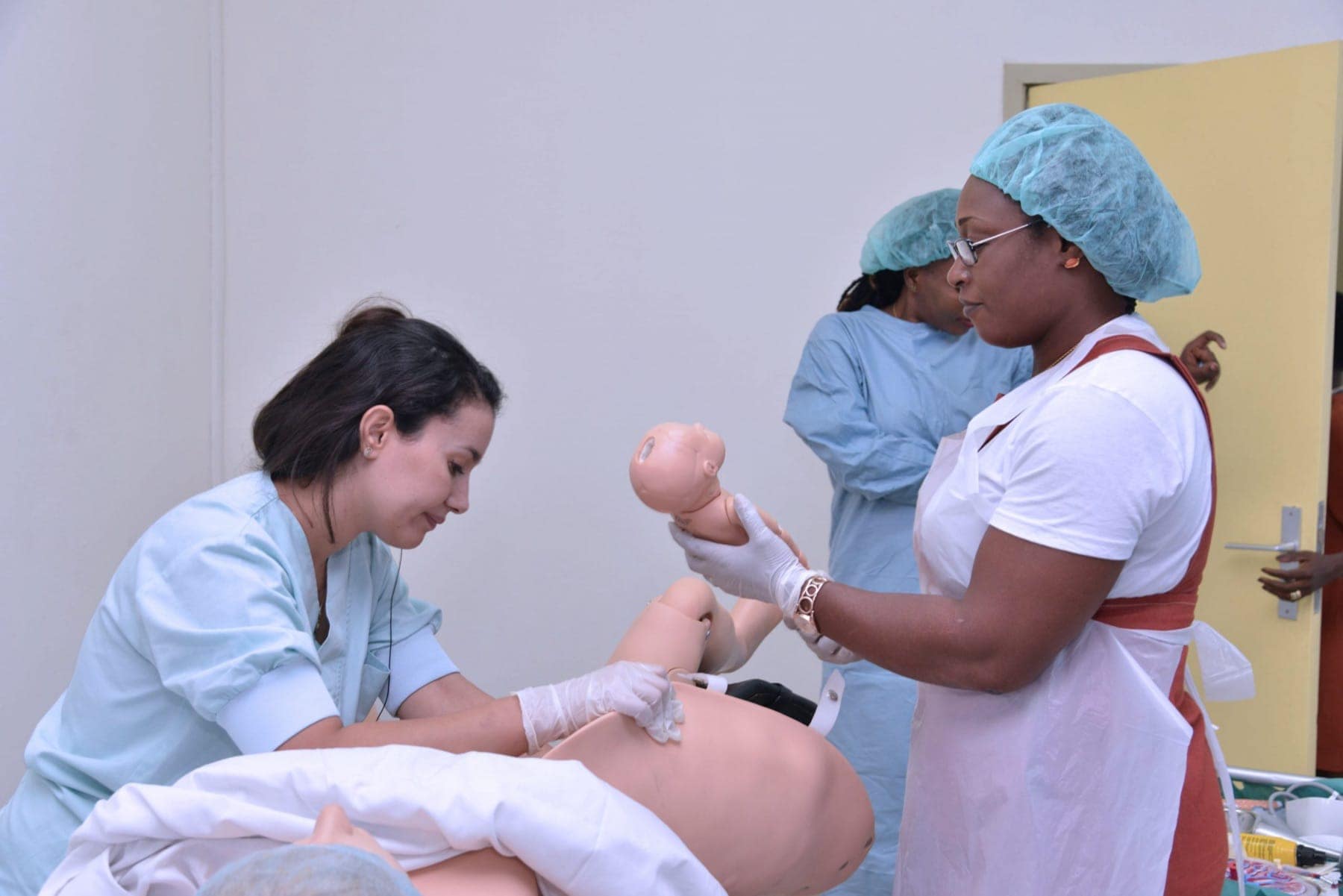
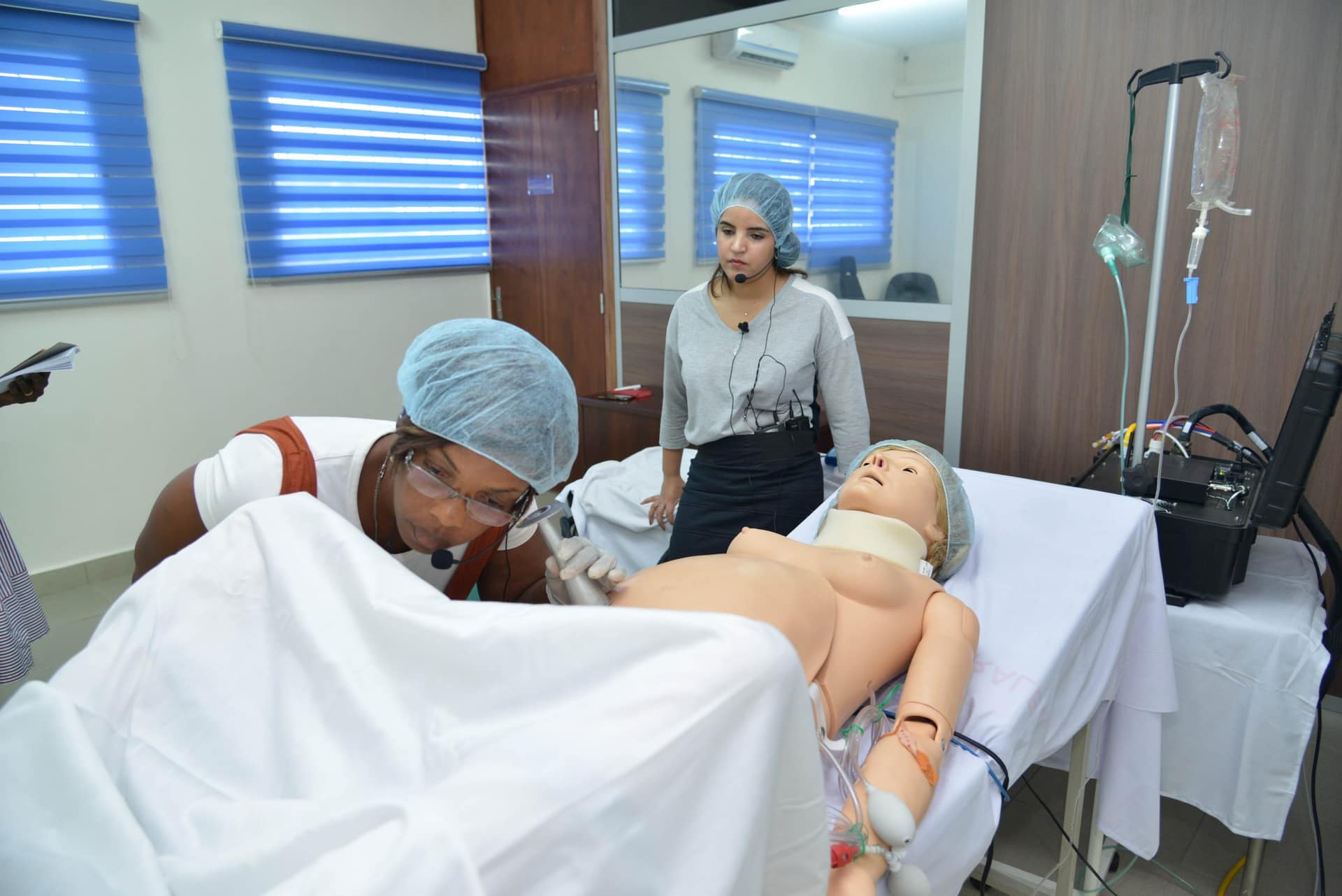
Obstetric emergency simulation on a mannequin
Health professions
Training health workers where they practise.
The sheetThe typical schedule
One caravan cohort, thirteen weeks.
Site set-up
haulage · servicing · fencing
Cutting & sewing
workshop · 15–20 learners
Aluminium joinery
workshop · 15–20 learners
Maintenance electrics
workshop · 15–20 learners
Vehicle maintenance
workshop · 15–20 learners
Certified office skills
computer lab · 18 stations
Languages & soft skills
alongside, 2 sessions / week
Career centre
drop-in · employer days
A cohort of 100 young people, 5 trades, 3 months · then the caravan moves on to the next site.
Track record with this module
The experts
Practitioners who teach, trainers who stay.
A teaching team recruited and managed for you: practitioners still in practice, trainers of trainers, and one programme director as your single point of contact. On assignment at your premises, with your curriculum or with ours.
Open the five-part Experts sheet
- Who it is for
- A ministry or institute that wants its trainers trained
- An operator that wants practitioners to run its sessions
- An agency that requires measured skills transfer
- A vocational campus recruiting its teaching staff
- What you receive
- Expert profiles defined with you and named in the terms of reference
- A programme director as your single point of contact
- Training of local trainers, certified at the end of the sessions
- Assignment costs included: travel and accommodation
- Materials transferred, local trainers taking over
- How it works
- 01Profiles · per module: practitioner, trainer of trainers, supervisor
- 02Pool · teaching hospitals, institutes, learned societies, in-country experts
- 03Assignments · sessions delivered, local trainers trained in pairs
- 04Certification · trainers certified, materials transferred
- How it is priced
- Per expert per assignment day, costs included
- Per training-of-trainers session, certification included
- Per month for programme direction
- What it asks of you
- Premises and curriculum, if you do not add the Unit and Programme modules
- Availability of the local trainers to be trained
- Any allowances paid to participants
The three assignments
- Run the sessions
- practitioners still in practice, never theorists
- Train your trainers
- paired working, certification, local succession
- Direct the programme
- one point of contact, from scoping to final report
How we assemble the team
- 01Practitioners still in practice
- A hospital midwife trains midwives; a workshop master trains apprentices; a certified engineer teaches digital skills. We do not recruit theorists.
- 02Trainers of trainers
- Every programme also trains local trainers, certified at the end of the sessions, so the skills stay when the unit moves on.
- 03Local and international
- The pool mixes experts from the programme’s own country with experts from elsewhere: South-South cooperation, exchange of practice, protocols brought up to standard.
- 04One programme director
- A single point of contact for the client, from scoping to final report: they run the teaching team, the logistics and the steering committee.
The fields
- Health professions
Obstetrician-gynaecologists, midwife trainers, hospital hygienists, quality and risk-management specialists.
Where they come from · Teaching hospitals and health facilities, learned societies
- Technical trades
Trainers from industry and the crafts, workshop masters: garment making, aluminium, electrical work, vehicles, construction.
Where they come from · Vocational training institutes, partner companies
- Digital and office skills
Vendor-certified trainers, IT engineers and technicians.
Where they come from · Engineering schools, certification centres
- Languages, soft skills, employability
Certified language teachers, professional communication coaches, careers advisers.
Where they come from · Language centres, career centres
- Agriculture and energy
Agronomists, renewable-energy technicians, agri-processing specialists.
Where they come from · Agronomy institutes, industry
They delivered the Côte d’Ivoire programme, 2017
- Pr Abderraouf Soummani
Obstetrics and gynaecology expert, obstetric emergencies and ultrasound modules
Hospital consultant, Marrakech
- Dr Saïd Belkadi
Hospital management expert, quality, accreditation and risk management module; executive director of the health division
Pertia Group
- Soufiane Makhloufi
Hygiene expert, hospital hygiene and infection prevention module
Pertia Group
- Fadoua Ballouk
Dietetics and nutrition expert, childcare and maternal and infant nutrition module
Pertia Group
- Hanane Oubidar
Corporate strategy and organisational management expert, total quality management module
Pertia Group
Names and roles as they appear in the programme films (Abidjan, 21 November – 22 December 2017), alongside the midwife trainers and ward supervisors of Cocody teaching hospital.
How a programme is governed
Who chairs, who delivers, who reports.
What is transferred
- Local trainers trained in pairs and certified: the succession
- Materials, competency frameworks and participant kits
- Protocols and assessment tools
- The programme report and the photo library
Your contact
Describe the need to us. Thirty minutes are enough to frame a programme.
Programme direction